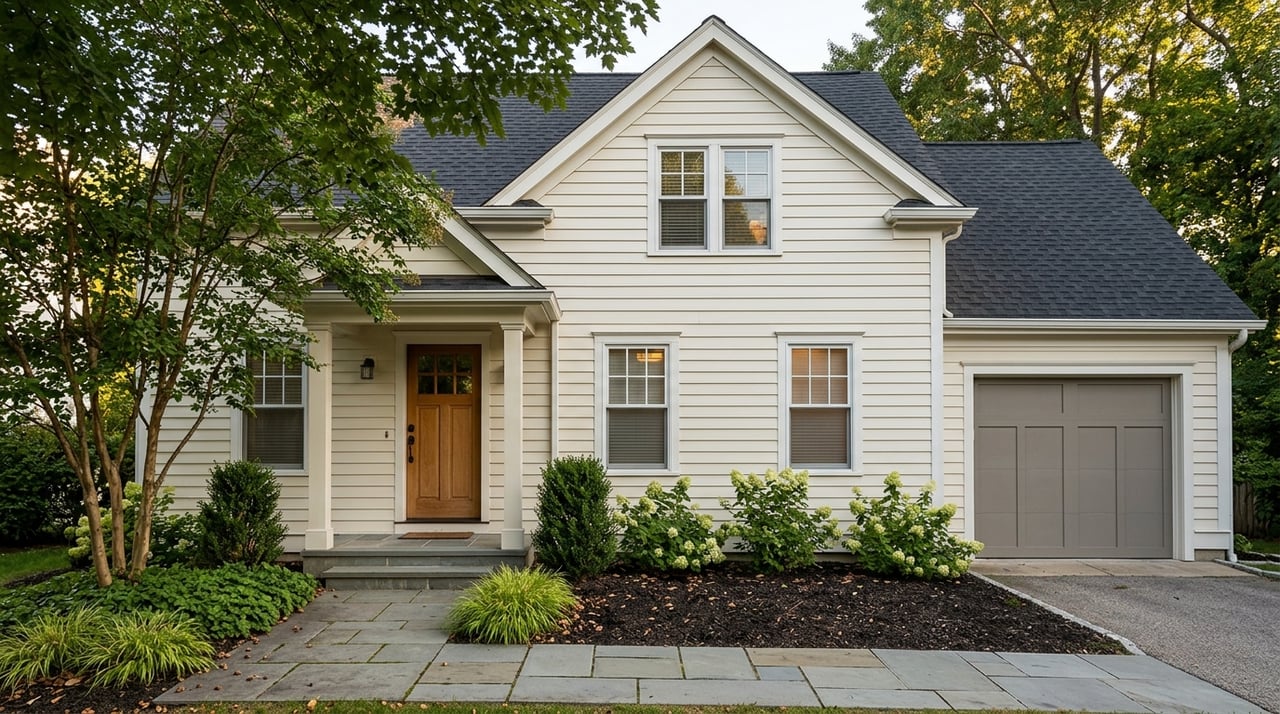
Right-Sizing In Longmeadow: From Large Home To Low-Maintenance
July 23, 2026
July 23, 2026
Are you starting to look around your house and wonder if it still fits the way you live today? In Longmeadow, that question is common for homeowners who have spent years, and often decades, in a home they love but no longer want to maintain the same way. If you are thinking about moving from a larger home to something lower maintenance, this guide will help you understand your options, plan your timing, and make smarter next steps. Let’s dive in.
Right-sizing is not always about going much smaller. Often, it means choosing a home that better matches your daily routine, budget, and comfort level.
That idea fits Longmeadow especially well. Census estimates show 23.1% of residents are age 65 or older, 90.1% of homes are owner-occupied, and 93.7% of residents lived in the same house one year earlier. In a stable, high-ownership town like this, many homeowners eventually reach a point where less upkeep feels more appealing than extra square footage.
Longmeadow has also taken steps to support aging in place. The town adopted an Age Friendly Resolution in 2017, became AARP-certified as a Dementia Friendly Community in 2018, and has an Age Friendly Community Task Force focused on housing, transportation, access to services, and participation in community life.
Before you look at listings, start with your day-to-day life. The best right-size move usually begins with how you want to live, not just how many bedrooms you want next.
Ask yourself a few simple questions:
Your answers shape the whole strategy. In Longmeadow, where replacement housing options can be limited, having clarity early can save you time and stress.
One of the biggest parts of right-sizing in Longmeadow is knowing that the local housing menu is narrower than in some nearby communities. The town’s planning materials state that detached single-family homes still dominate local zoning.
According to the town’s long-range plan, no zoning district permits new two-family or multi-family construction without age limitations, and in residential districts, single-family homes are the only by-right use. That matters because it can limit the supply of lower-maintenance choices that some homeowners expect to find.
If you want to move but stay in town, a smaller existing home or resale condo may be the most practical path when one becomes available. Inventory in these categories may be limited, so it helps to start your search early and stay flexible on timing.
This does not mean options never come up. It means you should plan for a more selective search and be ready when the right fit appears.
Longmeadow’s planning framework includes an Elderly Residential Zone, which is restricted to residents age 62 and older. For some homeowners, that may be a good fit if they want a housing type designed around that category.
If this path interests you, it is important to evaluate not just the unit itself, but also the lifestyle, rules, and long-term comfort of the community.
For many Longmeadow homeowners, the most important recent change is the 2025 accessory dwelling unit, or ADU, bylaw. The town now allows one ADU by right on any property where single-family homes are allowed.
The bylaw says an ADU can be no larger than half of the principal dwelling or 900 square feet, whichever is smaller. It also cannot be used as a short-term rental.
This creates a meaningful option if you want lower-maintenance living without fully leaving your property. In some cases, homeowners may explore an in-law style setup, space for a caregiver, or a simpler on-site living arrangement that lets them stay rooted in the community.
Longmeadow is also developing ADU design guidelines and standards. That suggests ADUs are becoming a real planning option, though details may continue to evolve.
This is one of the most important decisions in the process. If staying in Longmeadow is your top goal, your search may require more patience because the town has fewer lower-maintenance housing types than some buyers expect.
If your top goal is reducing upkeep quickly, you may need to compare in-town options with nearby alternatives. Either way, the decision should reflect your routine, not just the emotional pull of your current address.
A clear priority helps you answer the next question: do you sell first, buy first, or prepare both at the same time?
Right-sizing works best when the sale plan and the replacement-home plan are connected. In Longmeadow, that matters even more because the next-home search may take longer than the sale.
A practical order often looks like this:
This kind of sequencing helps you avoid feeling rushed. It also keeps you from focusing only on the sale price while overlooking where you will go next.
Recent data points to a competitive Longmeadow market, which can be helpful if you are selling a long-held home. Redfin reported a median sale price of $518,000 for the three months ending May 2026, up 7.9% year over year.
Zillow estimated the average home value at $550,860 in June 2026, up 5.3% over the prior year, with pending status in about 8 days. Realtor.com also described Longmeadow as a seller’s market in June 2026.
The exact figures vary by source and method, but the message is consistent. Sellers can benefit from strong positioning, though pricing and presentation still matter.
A large home that has been well loved over the years often needs a different kind of preparation than a recently updated property. Right-sizing sellers usually do best when they treat prep as a staged process instead of a last-minute sprint.
Start by separating what you will keep, donate, gift, store, or discard. This helps your future move and also makes the home easier to present to buyers.
Then focus on the basics that support market appeal:
This is where consultative guidance matters. Thoughtful pricing, staging input, and professional listing preparation can help a long-time family home connect with today’s buyers.
If your goal is lower maintenance, it also makes sense to review ownership costs. Longmeadow’s FY2026 real estate tax rate is $19.32 per $1,000 of assessed value.
Using the Census median owner-occupied value of $454,100, that works out to a rough annual property tax estimate of about $8,773 before any exemption. The Assessor’s Office also notes personal real estate tax exemptions for blind residents, low-income elderly residents, and veterans with disabilities, with applications due at the end of March each year.
This does not mean you should move based on taxes alone. But it is a useful reminder that right-sizing is often about both time and monthly cost.
One detail that can affect your timeline is sale compliance. Massachusetts requires many sellers of one- and two-family homes to obtain smoke and carbon monoxide alarm compliance before a sale or transfer.
Longmeadow’s Fire Prevention page specifically advertises residential smoke-detector inspections for sale or transfer. If you are planning a move, it is smart to address this early so it does not become a closing delay later.
In Longmeadow, the biggest challenge is often not whether your current home will attract interest. It is whether the next housing option appears when you need it.
That is why right-sizing here is less about making a fast exit and more about building a smart transition plan. When you begin early, you give yourself more time to explore a smaller resale home, a condo, an age-restricted option, or an ADU path that lets you remain on your property.
The goal is not simply to move out of a larger home. The goal is to move into a lifestyle that feels easier, more practical, and better aligned with this next stage.
If you are weighing your options in Longmeadow, a thoughtful plan can make the process feel much more manageable. When you are ready to talk through timing, pricing, presentation, and your next-home strategy, connect with Romina D'Angelo.

Romina has represented both sellers and buyers, her clients have come to depend on her considerable expertise and market knowledge.