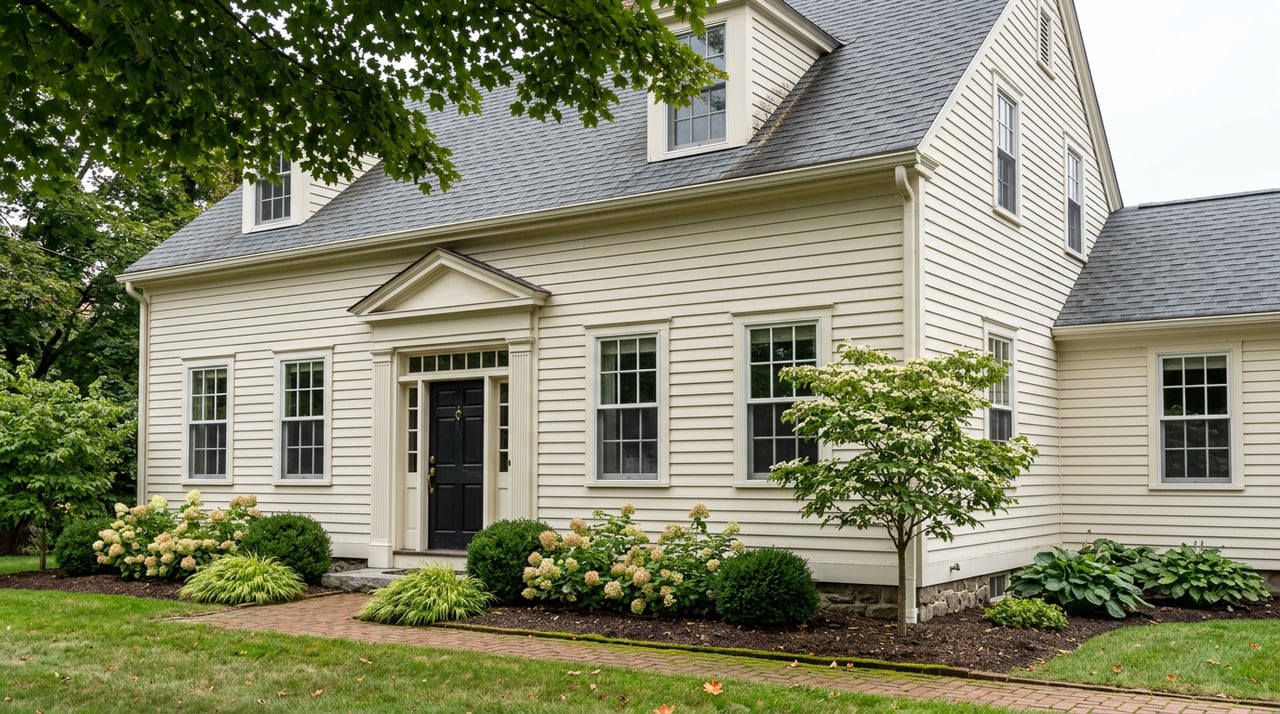
Buying on Suffield's Historic Main Street: What the Historic District Actually Regulates
August 27, 2026
August 27, 2026
Most buyers who fall for a colonial on Suffield's Main Street assume the plaque tells the whole story. It doesn't. A National Register listing is an honor, not a rulebook. The paperwork that actually decides whether you can replace your windows, add a garage, or take down a shed comes from a separate, older piece of town law that most listing sheets never mention.
That distinction matters more than the plaque itself, and it's where a lot of buyers get tripped up after they're already under contract.
Suffield has real historic credentials. The Dr. Alexander King House, built in 1764, was individually listed on the National Register in 1976. The Suffield Historic District along Main Street and the Hastings Hill Historic District followed in 1979. A handful of other properties around town, including the Gothic Cottage on Mapleton Avenue, King's Field House on North Street, the John Fuller House on Halladay Avenue, the Lewis-Zukowski House on South Grand Street, and Hilltop Farm on Mapleton Avenue, picked up their own individual listings between 1982 and 2005.
None of that, on its own, restricts what an owner can do to the house. The National Register is a federal recognition program administered through the National Park Service. It opens the door to certain tax credits for income-producing properties, but it doesn't require a homeowner to get permission before replacing a roof or painting a door.
What actually controls that decision is Suffield's local historic district designation, and Suffield only created two of them, both in 1963: the district along Main Street and the smaller Hastings Hill district. If your future home sits inside one of those boundaries, a different set of rules applies the moment you pick up a hammer.
Buyers touring Suffield often treat "historic Suffield" as a single idea. It isn't. The two local districts look and behave differently.
| District | Established | Extent | Character |
|---|---|---|---|
| Suffield Historic District (Main Street) | Local district 1963, National Register 1979 | Runs roughly 400 feet on either side of North and South Main Street, encompassing about 175 sites and structures, only four of which are considered non-contributing | A built-up village streetscape with three churches, Suffield Academy, and homes spanning Colonial, Georgian, Federal, Greek Revival, Italianate, and Colonial Revival styles |
| Hastings Hill Historic District | Local district 1963, National Register 1979 | A three-quarter-mile stretch of Hill Street at its junction with Spruce Street and Russell Avenue, about three miles from the town center | A rural crossroads settlement centered on the 1842 First Baptist Church, with a house at 1061 Hill Street dating to the 1730s or 1740s |
The Main Street district is dense enough that the 400-foot depth was chosen specifically so it would sweep in outbuildings and barns tied to the old farms that still front the road. Hastings Hill is the opposite: narrow, quiet, and defined by its lack of intrusion rather than its density. A buyer comparing a Main Street Georgian to a farmhouse on Hill Street is really comparing two different regulatory environments, not just two different price points.
Connecticut's enabling statute is specific about what counts. Before any exterior alteration, new construction, or demolition inside a local historic district, an owner has to apply for and receive a certificate of appropriateness from the historic district commission. The requirement holds "whether or not a building permit is required," which means small projects that would otherwise sail through the building department, like replacing a fence or changing window trim, still need commission sign-off if they're visible from a public street, way, or place.
The process has real mechanics, not just a vague expectation of good taste:
Interior work isn't touched by any of this. Neither is anything on the back of a house that can't be seen from the street. The review is narrowly aimed at what a passerby would notice, which is exactly why it matters most for the kind of renovation a buyer typically plans in the first year: new siding, a rebuilt porch, an addition, or a garage.
Suffield also publishes its own Historic District Handbook for owners navigating this, a sign that the town expects this process to come up often enough to warrant a standing guide rather than a one-off conversation with a building official.
Here's where the distinction really pays off for a buyer. The individually listed National Register properties scattered around town, the Gothic Cottage, King's Field House, the John Fuller House, the Lewis-Zukowski House, Hilltop Farm, carry the same federal recognition as a house on Main Street, but they sit outside the boundaries of either local district. Suffield's local historic district ordinance only ever created two districts, both in 1963. Nothing in the town's public record points to a separate local historic property designation for these individual sites.
Practically, that means an owner of one of these homes gets the prestige of the National Register listing without the certificate of appropriateness requirement that comes with sitting inside the Main Street or Hastings Hill boundaries. It's a distinction worth confirming with the town before you assume either way, because the difference changes how much lead time a renovation project needs.
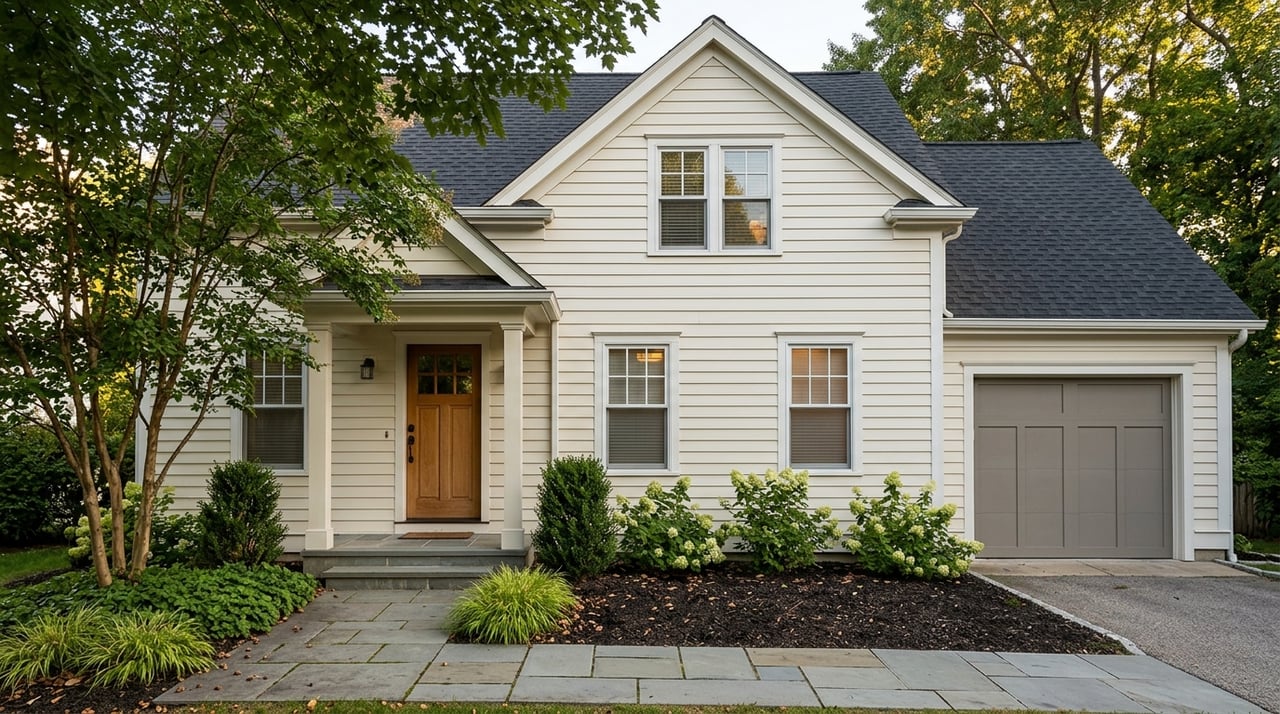
A property like the circa-1790 house built by Thaddeus Leavitt, prominently sited on Historic Main Street, is exactly the kind of home where this process becomes real rather than theoretical. Buyers drawn to homes like this are usually planning some exterior work within the first few years, whether it's restoring original trim, adding a garage, or updating a roofline. That plan now runs on the commission's calendar, not just your contractor's.
A few things worth doing before you write an offer on a Main Street or Hastings Hill property:
Ask the listing agent or seller whether any certificate of appropriateness applications are pending or were filed in the past few years. Check with the town whether any exterior changes were made without the required approval, since Connecticut's statute gives the commission authority to act against work completed outside the process. Build the 65-day hearing window into your renovation timeline rather than assuming a standard building permit schedule. And separate what you're buying: a National Register plaque is a story you can tell at closing, but the local district boundary is the paperwork that will shape your first project.
Does living in a historic district mean I can't update my house? No. The review only applies to exterior features visible from a public street, way, or place. Interior renovations, and anything not visible from the road, fall outside the commission's authority entirely.
Does a National Register listing affect my mortgage or homeowners insurance? Not directly. The listing is a historic and architectural designation recorded with the National Park Service. Lenders and insurers underwrite based on the physical condition and use of the property, not its Register status.
What if a previous owner changed something without getting a certificate of appropriateness? Ask directly and check town land use records before closing. Connecticut's statute gives the historic district commission authority to act against alterations made without an approved certificate, which means an unresolved issue from a prior owner can become the new owner's problem to sort out.
If you're weighing a Main Street colonial against a Hastings Hill farmhouse, or trying to figure out how a renovation timeline fits around Suffield's historic district process, that's exactly the kind of local mechanics Romina D'Angelo walks buyers through before an offer goes in, not after. Find the Home You Deserve: contact Romina to talk through what a specific property in Suffield's historic district would actually mean for your plans.

Romina has represented both sellers and buyers, her clients have come to depend on her considerable expertise and market knowledge.