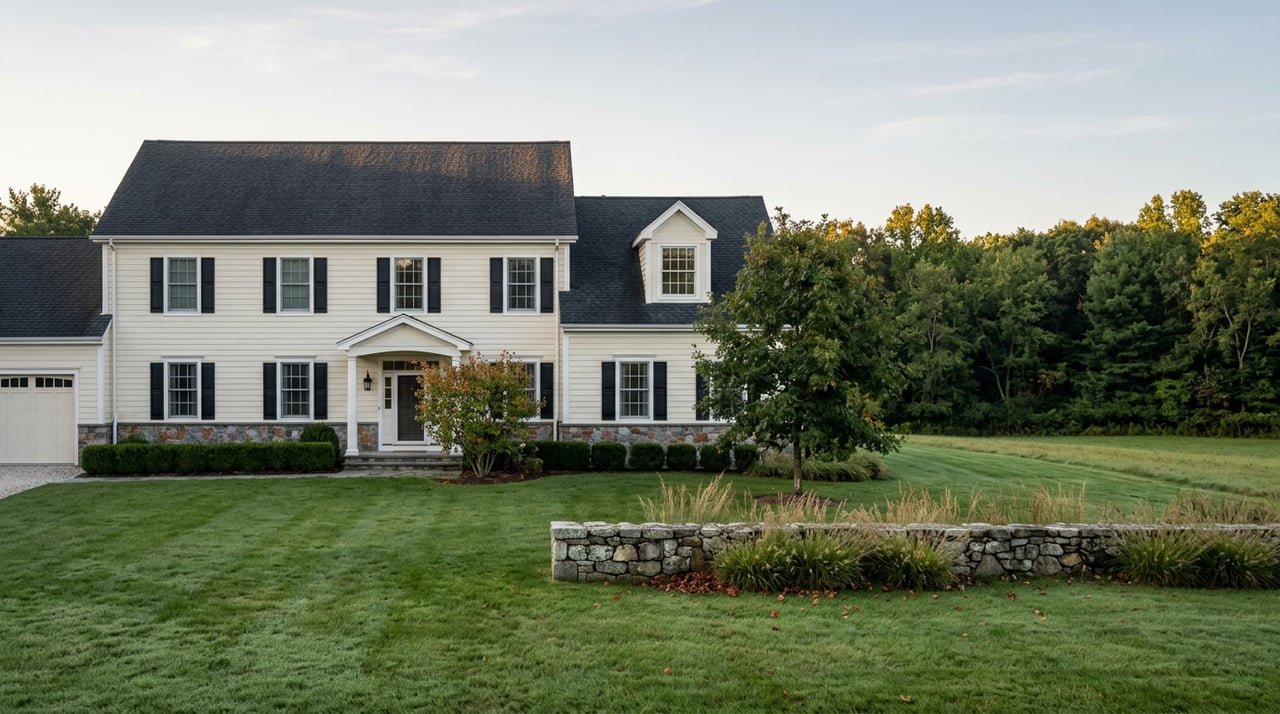
The Tax Break On Suffield Farmland Doesn't Survive The Sale
September 24, 2026
September 24, 2026
A buyer touring an open parcel off one of Suffield's back roads this fall will probably ask the same question first: why is the tax bill so low for four acres this close to Bradley Airport and I-91. The listing sheet usually has an answer, something about current-use assessment or farmland classification. It sounds like a feature of the property. It isn't. It's a feature of the seller, and it does not travel with the deed.
That distinction is the part almost nobody explains before an offer goes in, and it's the reason land purchases in Suffield can carry a cost that never shows up on the assessor's card.
Suffield's low farmland assessments trace back to Connecticut's Public Act 490, a 1963 law that lets farm, forest, and open space land get taxed on what it produces rather than what a developer would pay for it. The Connecticut Department of Agriculture's own explainer on the law is blunt about why it exists: without the reduced assessment, most landowners couldn't afford to keep the land as land at all. Suffield is one of the towns the state specifically lists when it publishes its use-value tables, and the soil categories on that table aren't generic. They're graded by how well they once grew shade tobacco and binder tobacco, the crops that built this stretch of the Connecticut River Valley.
That history is closer than it looks. The Markowski Farm on Babbs Road in West Suffield became, by the mid-2010s, the town's last shade tobacco grower still working the crop that once covered fields on every side of Route 75. The Suffield Observer described what that landscape used to look like in a single line: "During the late 1950's Suffield was a patchwork of fields covered by white tent cloth." Most of that patchwork is gone now, replaced by house lots, warehouses near the airport, and the kind of subdivisions that get built when a farm classification lapses and the land finally gets valued at what it's actually worth on the market.
Here's the mechanism that catches buyers off guard. Under Connecticut General Statutes Section 12-504h, a PA 490 classification is personal to the owner who applied for it. It does not run with the land. When a parcel sells, the classification ends on the date of transfer, full stop. If the new owner wants the same reduced assessment, they have to file their own application with the town assessor and get approved on the land's current use, not the seller's history with it.
For a buyer who intends to keep raising hay or leasing to a working farmer, that's usually a paperwork step, not a financial one. For a buyer who bought the parcel to build on, it's the moment the real tax bill arrives, and it's often paired with something bigger than a reassessment.
Connecticut added a second layer to this system in 1971 specifically to discourage speculation on farmland. If classified land is sold, transferred, or converted to a different use, the town can impose a conveyance tax on top of the sale, separate from the higher property taxes that follow. The rate starts at 10 percent in the first year after classification and steps down by one point a year until it phases out entirely after the tenth year. The clock starts from the date of ownership for farm and forest land, and from the year of enrollment for open space. It resets when land changes hands, not when a new use begins, which means a buyer who closes on classified land and breaks ground within that same window can be looking at a real percentage of value owed to the town, on top of everything else the closing already cost them.
There's one exception worth knowing before assuming the worst. State guidance clarifies that certain transfers, ones that don't represent an arm's length sale for development, don't restart that ten-year penalty clock. That distinction matters enough that it's worth a direct conversation with the town assessor's office before treating any parcel as a clean slate.
Three questions are worth asking before an offer goes in on anything with acreage attached:
None of those questions show up on a standard listing sheet. All three change what the parcel actually costs to own.
Suffield's active land listings this fall make the pattern easy to see. A cleared, shovel-ready lot on Metacomet Lane, off Newgate Road, is the last available piece of a seven-home custom subdivision built by Blue Sky Builders on 38 acres, with every lot set against a 24-acre permanent open space parcel the development preserved rather than built on. That open space parcel is a visible reminder of what the whole 38 acres used to be before it became house lots, and it's a fair bet that land carried some form of use-value classification before the subdivision plan went through the town's approval process.
A second, smaller example sits on Suffield Street, where a flat, wooded, already-approved building lot connects to public sewer in the street, but the connection costs roughly $20,000 more than typical because of a long run required to reach it. The back third of that same lot is wetlands, and the final plot plan needs sign-off from the Suffield Conservation Commission before anyone breaks ground. None of that is a PA 490 issue specifically, but it's the same lesson from a different angle: the number on the listing is a starting point, not a total.
Land itself isn't cheap once it's on the open market here. Asking prices across Suffield's current land listings this fall cluster well above $90,000 an acre, even before a buyer accounts for sewer connection costs, wetland setbacks, or a rollback tax that might come due the moment a farm field becomes a foundation.
None of this means farmland or open acreage in Suffield is a bad buy. It means the sticker price, and even the reduced tax line that makes the parcel look affordable, is only part of what the land will cost once it changes hands and changes use. The gap between those two numbers is exactly the kind of thing a title search won't catch and a listing photo won't show.
Does a new owner automatically keep the seller's PA 490 classification? No. The classification is tied to the person who applied for it, not the parcel. A new owner has to file their own application with the assessor and get the land requalified under current use.
If I buy classified land and never plan to develop it, do I still face a penalty? Simply buying doesn't trigger the conveyance tax on its own. The penalty applies when there's a sale combined with a change in use, or when the land is developed within the declining ten-year window tied to its classification date.
How do I find out how much penalty time is left on a specific parcel? The town assessor's office keeps the classification date on file for each parcel. That's the first call to make before writing an offer on anything with working land attached.
Land with this kind of history rewards buyers who ask the right questions before they sign, not after. If you're weighing a parcel in Suffield, whether it's a working field, a wooded lot, or something in between, Romina D'Angelo can help you understand what's actually attached to the deed before you make it yours. Find the Home You Deserve — Contact Romina.

Romina has represented both sellers and buyers, her clients have come to depend on her considerable expertise and market knowledge.