Explore the Appeal of Country Living in Suffield CT
May 14, 2026
May 14, 2026
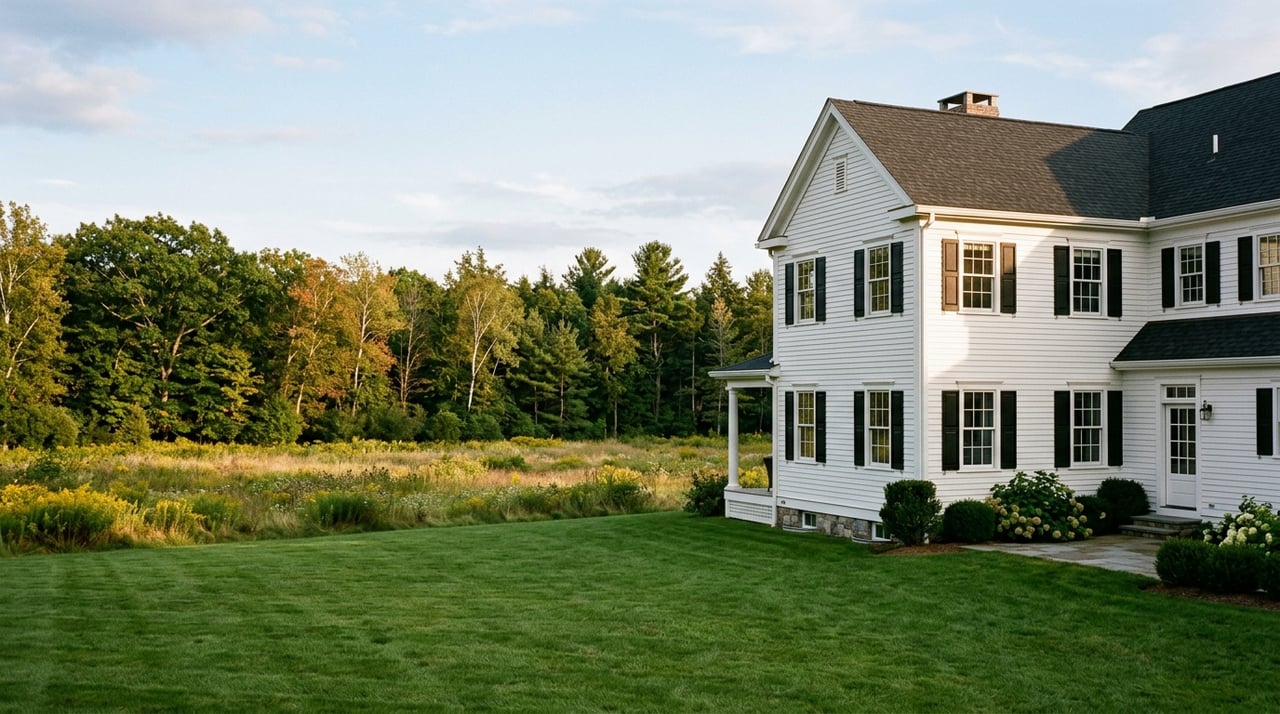
Dreaming of a home where the view includes fields instead of rows of rooftops? If you are drawn to more land, more privacy, and a setting that feels tied to New England’s agricultural roots, Suffield may already be on your radar. The good news is that Suffield’s country feel is not just a marketing phrase. It is supported by local land use, active farms, and a town layout that still leaves room to breathe. Let’s dive in.
Suffield has a distinctly rural character because the town’s land use planning is built around residential and agricultural uses. Local zoning states that residential areas are intended to provide homes surrounded by open space while preserving agricultural pursuits. That creates a different feel from a more typical suburban market.
The numbers help show why. In the latest town profile, Suffield had 15,636 residents across 42 square miles, or about 370 people per square mile. For many buyers, that lower-density pattern translates into more visual space, a quieter setting, and a stronger connection to the landscape.
Suffield also has meaningful land preservation. The town reports about 2,200 acres of preserved farmland and about 1,500 acres of protected or managed open space, which equals roughly 14% of the town’s land area. When you drive through town, that preserved land helps explain why Suffield still presents as a rural New England community.
In Suffield, agriculture is not just part of the backdrop. It is part of everyday life. The town’s farms page lists working farms and farm-related businesses offering berries, dairy, meat, flowers, plants, seasonal produce, and Christmas trees.
That matters if you are looking for an authentic country setting. Examples named by the town include Kuras Farm for blueberries and raspberries, Hastings Farm for dairy and meat, and Breezy View Farm for Christmas trees. These are signs of active working land, not just open acreage with no agricultural use.
Another thing that shapes the local feel is where those farms are located. They are spread across roads like East Street, Mountain Road, North Grand Street, Hill Street, Sheldon Street, Thrall Avenue, and Phelps Road. Instead of one isolated farm district, Suffield has a more dispersed agricultural pattern that blends homes and farms across the community.
If you are house hunting in Suffield, the country feel often shows up in lot size and spacing. The town’s zoning regulations include several residential districts with relatively generous minimum lot sizes. In R-90, the minimum lot size is 90,000 square feet with 200 feet of frontage, while R-45 requires 45,000 square feet and 175 feet of frontage.
Even R-25 is still sizable at 25,000 square feet with 125 feet of frontage. In practical terms, these standards support lower-density housing patterns than you might expect in a more compact subdivision setting. For you as a buyer, that can mean larger yards and more separation between homes.
The Farmland Preservation zone goes even further. It requires a permanent conservation restrictive covenant or easement and a minimum lot size of 5 acres. If you are searching for a property with a true estate feel, longer views, or a stronger connection to open land, this zoning can play a major role in what is available.
For some buyers, country living is not only about having a larger yard. It is about having room for a small-scale agricultural lifestyle. Suffield’s zoning rules support that in specific ways, which is one reason the town appeals to buyers who want more than a standard suburban property.
The zoning code allows horses for pleasure in all residential zones. The town’s zoning FAQ also says up to two horses are allowed on at least 2 acres, up to six hens may be kept on a quarter acre, and most other farm animals require 5 acres or more. If you are considering a hobby farm setup, these details are important to review before you buy.
This is where local guidance matters. A home may look ideal online, but the lot size, zoning district, and allowed uses can shape what is realistically possible. If your goal includes horses, hens, or a more farm-oriented property, it helps to evaluate the land and the house together.
One of the most distinctive parts of Suffield is how residential life and agricultural life often exist side by side. Farmers’ markets and permanent farm stands are allowed in the Farmland Preservation zone and in several residential districts. That helps explain why farm activity can feel integrated into the town rather than pushed to the edges.
The town also highlights a farmers market and annual events such as May Market and Suffield on the Green. These seasonal traditions reinforce how local produce and farm culture remain part of the town’s identity. For many buyers, that adds to the appeal of living here.
It also means country living comes with real-world expectations. Suffield’s 2025 right-to-farm ordinance states that agriculture is part of the town’s heritage and protects ordinary farm impacts when accepted practices are followed. That can include livestock noise, odors, dust, fertilizers, pesticides, and some water-quality effects.
Country living in Suffield is about more than land alone. It is also about how you use that space and the surrounding natural areas. The town promotes outdoor activities including hiking, horseback riding, swimming, boating, and fishing.
Local recreation options add to that lifestyle. Suffield’s trail network includes the Suffield/Windsor Locks Canal Trail, the Metacomet Trail, the New England Trail, and the Farmington River Canal corridor. If you enjoy being outside, these amenities can make day-to-day life feel more connected to the landscape.
Babb’s Beach on Lake Congamond is another local feature buyers often appreciate. It is town property and offers swimming, picnic space, and kayak or canoe storage, with resident park-sticker access noted by the town. Places like this help balance the privacy of larger lots with nearby opportunities to get out and enjoy the area.
A country property can be appealing, but it also calls for a more careful review before you make an offer. One practical issue is utility service. Suffield’s Water Pollution Control Authority maintains more than 80 miles of sewer line and serves homes within the sewer district, so utility setup should be confirmed parcel by parcel.
You should not assume that a rural lot has the same services as a home closer to the town center. That can affect your planning, future improvements, and general expectations for the property. It is one of the most important questions to ask early in the process.
Maintenance is another factor. Because Suffield’s zoning pattern favors larger lots and open space, country properties generally imply more grounds to maintain than a compact suburban lot. If you love the idea of extra space, it is smart to think through what that means for upkeep in every season.
Suffield can be a strong fit if you want a home with more land, more breathing room, and a setting where farms and open space are still part of everyday life. It offers a rural atmosphere without losing access to local recreation, community events, and residential options across different lot sizes. For many buyers, that balance is exactly the draw.
The latest town profile also gives useful context for the market. Suffield reports a median home value of $401,700, a median household income of $125,352, and a mean commute time of 26 minutes. Those numbers do not tell the whole story, but they help frame what life in town can look like.
If you are exploring country living in Suffield, the key is to match your lifestyle goals with the right property and location. Some buyers want open views and privacy. Others want a manageable amount of land with access to farm stands, trails, and local amenities.
Working with someone who understands the nuances of lot size, zoning, and local property patterns can make that search much smoother. If you are ready to explore homes, land, or rural properties in Suffield, connect with Romina D'Angelo for knowledgeable, hands-on guidance.
Romina has represented both sellers and buyers, her clients have come to depend on her considerable expertise and market knowledge.